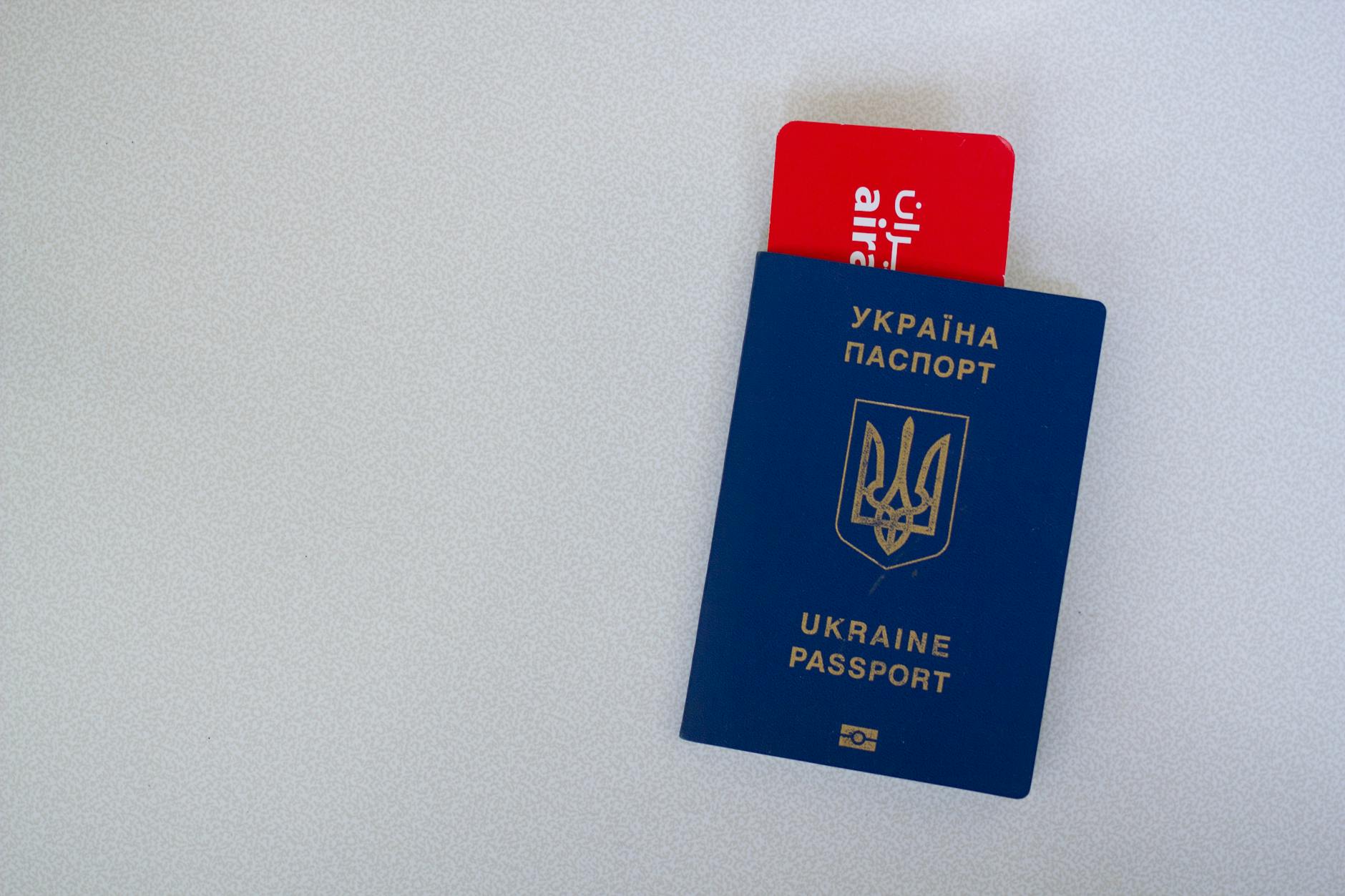
Quick Answer (30 Seconds)
China offers a 240-hour (10-day) transit visa exemption for citizens of 55 countries. The condition: you fly from Country A to China, then transit to Country B (a third country), and can enter China through designated ports for a stay of up to 240 hours (10 days). You need a pre-booked onward connecting ticket to a third country (with confirmed date and seat), and your passport must be valid for 3+ months. Entry is through designated ports (currently 65 ports), and your activity area is limited to 24 provinces/municipalities, with some inter-provincial travel allowed. Tibet is off-limits. This is perfect for travelers going to Japan/Southeast Asia who want to spend a few days in China along the way. The difference from unilateral visa-free entry: visa-free means you can enter directly without a transit purpose, while 240-hour transit requires an actual "transit" itinerary.
Remember: 240 hours = 10 days. You must have an onward ticket, and Tibet is off-limits.
Full Guide
I've lived in China for five years and seen too many foreign friends confuse "visa-free" with "transit visa exemption." These are two completely different policies: visa-free means "come to China for tourism without a visa," while transit visa exemption means "you're already transiting through China, so we let you stay a few days."
What Is the 240-Hour Transit Visa Exemption
- Transit Visa Exemption — You depart from Country A, transit through China, and continue to Country B (a third country). When you enter at a Chinese port, you don't need a visa, and can stay up to 240 hours (10 days)
- Core requirement: You must have a genuine "transit" — from Country A to China, then from China to Country B, where A is not B. A round trip to the same country doesn't count as transit
- Previously there were 72-hour and 144-hour versions; in December 2024, these were unified and extended to 240 hours, with the list of eligible countries expanded
Eligible Countries (55, Continuously Expanding)
As of June 2025, 55 countries are eligible for the 240-hour transit visa exemption, mainly including:
- Europe — UK, France, Germany, Italy, Spain, Netherlands, Belgium, Austria, Sweden, Switzerland, Norway, Denmark, Finland, Poland, Greece, Portugal, and about 40 European countries total
- Americas — USA, Canada, Brazil, Mexico, Argentina, Chile (6 total)
- Oceania — Australia, New Zealand
- Asia — Japan, South Korea, Singapore, Brunei, Qatar, UAE, Indonesia
- The complete list can be found on the National Immigration Administration website
Requirements (All Must Be Met)
- Onward ticket to a third country — You must hold a connecting ticket with a confirmed date and seat, proving you will leave China within 240 hours for a third country. Country A → China → Country B, where A is not B
- Passport validity — Passport must be valid for 3+ months
- Entry through designated ports — Enter China through a designated port (see below)
- Fill out arrival card — Complete the "Foreigner Arrival Card" on the plane or at entry
- No advance application needed — at the port, immigration verifies you meet the conditions and lets you through
Designated Ports (65)
Ports eligible for 240-hour transit visa exemption include:
- Beijing — Capital International Airport, Daxing International Airport, Beijing West Railway Station (railway port)
- Shanghai — Pudong International Airport, Hongqiao International Airport, Shanghai Port (international cruise terminals), Shanghai Railway Station
- Guangzhou — Baiyun International Airport, Nansha Port cruise terminal
- Chengdu — Tianfu International Airport, Shuangliu International Airport
- Xi'an — Xianyang International Airport
- Hangzhou — Xiaoshan International Airport
- Xiamen, Kunming, Chongqing, Shenzhen, Wuhan, Qingdao, Dalian, Harbin, Shenyang, Tianjin, Shijiazhuang, Nanjing, Ningbo, Nanning, Urumqi and other cities' major airports
- Land ports — Shenzhen Huanggang, Shenzhen Bay, Zhuhai Gongbei and some other land ports are also eligible
- Check the complete port list in National Immigration Administration announcements — confirm your entry port is on the list before traveling
Activity Area: 24 Provinces with Inter-Provincial Travel
- After the December 2024 policy optimization, the 240-hour transit visa exemption allows activity within 24 provinces (autonomous regions, municipalities)
- Some provinces allow inter-provincial travel — for example, entering in Beijing means you can visit Tianjin and Hebei
- Tibet is off-limits — Tibet is not included in the transit visa exemption activity area. To visit Tibet, you need to separately arrange a Tibet Travel Permit
- Unopened areas are off-limits — Some border regions and military-controlled zones are not accessible
- Immigration will inform you of your activity area at entry — confirm your itinerary cities are all within the allowed range
How 240 Hours Is Calculated
- Counted from midnight of the day after entry. For example, if you enter at 3 PM on January 1, the 240 hours start from 0:00 on January 2, and you must leave before 24:00 on January 11
- Note: 240 hours is not 10 calendar days — the day of entry doesn't count
- You must depart before the 240 hours expire — overstaying is illegal
Difference from Unilateral Visa-Free Entry
- Unilateral visa-free entry (since March 2024) — China offers unilateral visa-free entry to France, Germany, Italy, Spain, Malaysia, Switzerland, Ireland, Hungary, Austria, Belgium, Luxembourg, and others. You can enter directly for tourism without a transit purpose, for stays up to 30 days. No onward ticket required
- 240-hour transit visa exemption — Requires a genuine "transit" (onward ticket to a third country), 10-day stay
- If your country is eligible for both, prioritize unilateral visa-free entry (more flexible, longer stay). The 240-hour transit exemption is for citizens of countries not covered by unilateral visa-free entry (e.g., USA, Canada, UK with certain passport types)
Who Is It For
- Travelers going to Japan, South Korea, or Southeast Asia who book flights with a layover in China and want to explore for a few days
- Business travelers who don't have time to get a visa and use transit exemption as an emergency option (but business activity scope is limited — for formal business, an M visa is recommended)
- Foreigners who want to test the waters of China travel without getting a visa
- Multinational company employees who need short-term visits for training or meetings and can't go through the formal visa process in time
Practical Tips
- Book your itinerary carefully — Ensure your route is Country A → China → Country B, where A is not B. For example, USA → Beijing → Tokyo works; USA → Beijing → USA does not
- Tell immigration at entry — When you reach the counter, tell the immigration officer "transit visa exemption" and have your onward ticket and hotel booking ready
- Save your entry stamp page — Immigration will verify your entry time and stay duration at departure. Take a photo of the entry stamp page as backup
- Check the port list in advance — Confirm your entry airport or port is on the eligible list. If you enter through a non-designated port, you can't use the transit exemption and need a visa in advance
Disaster Manual
Disaster Scenario 1: No Onward Ticket — Denied Entry
Problem: You plan to use the 240-hour transit visa exemption, but only have a round-trip ticket to China with no onward ticket to a third country. Immigration won't let you through.
What to do:
- The hard requirement for transit exemption is an "onward connecting ticket to a third country." Without it, you don't meet the conditions, and immigration has the right to deny entry
- On-the-spot fix: Use your phone to buy a ticket from China to Japan/South Korea/Thailand/Vietnam right there (budget airlines are cheap), and show it to immigration
- No time at all? You'll be sent back to your origin. Booking an onward ticket in advance is mandatory
- Lesson: Before departure, confirm you have a connecting ticket with a confirmed date and seat — print it out as backup
Disaster Scenario 2: Went to an Area Outside the Allowed Range
Problem: You entered with the 240-hour transit visa exemption and traveled to a province not in your allowed activity area.
What to do:
- Immigration will clearly inform you of your activity area at entry. Going outside the range is a violation of stay conditions
- Most cases are caught at departure — you may be warned or face restrictions on future entry
- Going to Tibet? Not possible. Tibet is not in any transit exemption activity area, and visiting Tibet requires a separate Tibet Travel Permit
- Lesson: Ask immigration clearly about your activity area at entry, and only plan your itinerary within allowed provinces
Disaster Scenario 3: Overstayed the 240 Hours
Problem: You had too much fun in China and forgot the 240-hour deadline.
What to do:
- Overstaying is illegal — you'll face review at departure
- Short overstay (a few hours to a day): Go to the Exit-Entry Administration proactively to explain — may just be a fine and warning
- Long overstay: Fine ¥500/day (up to ¥10,000 total), or 5-15 days detention; may affect future Chinese visa applications
- Lesson: Calculate your deadline at entry and set a phone alarm. Book your departure flight for the day before the deadline for a safety margin
Information verified: August 2026 · Sources: National Immigration Administration (nia.gov.cn) transit visa exemption policy announcements, including the June 2025 announcement (Indonesia added, bringing total to 55 countries) and the November 2025 announcement (5 ports added, total from 60 to 65), Exit and Entry Administration Law of the PRC · Eligible countries and ports may expand — check official latest announcements.
The following are the author's personal QR codes (not merchant codes), with a fixed amount of ¥10.00 set for testing whether your card binding was successful.


About Personal QR Codes: This website is maintained by an individual. The QR codes are for personal daily use, not merchant codes. Since personal QR codes may not be able to accept international credit card payments, the transaction may fail. However, this does not mean your card binding failed — the fact that you reached the payment page itself confirms that your binding was successful.
About the Amount: Please do not modify the preset amount. This is simply a payment test. If the payment goes through, consider it as buying me a coffee. The fixed amount is set to avoid any inconvenience caused by accidentally entering the wrong amount.
Important: The primary purpose of these codes is to help you verify whether your registration and card binding were successful, not to generate profit. If you're not comfortable, feel free to skip this step.