Quick Answer (30 Seconds)
To conduct business in China (negotiations, signing contracts, trade shows), you need an M visa (business visa). Those entering visa-free generally cannot engage in business activities — visa-free is for tourism and visiting family, not for doing deals. Applying for an M visa requires: passport (valid 6+ months), visa application form, photo, and most critically — an invitation letter from a Chinese company. The invitation letter must include inviter information, invitee information, purpose of visit, itinerary, etc. Three validity types: 3-month single entry, 6-month double entry, 1-year multiple entry. Each stay is generally 30-60 days. Apply at Chinese embassies, consulates, or visa centers in your country.
Remember: Coming for business? Get an M visa. Don't risk doing business on visa-free entry.
Full Guide
I've lived in China for five years and applied for an M visa twice. Honestly, the M visa isn't hard to get — the most tedious part is the invitation letter. Your Chinese business partner may not know how to write one, so you'll need to tell them the format.
Who Needs an M Visa
- Foreigners coming to China for business activities — Including business negotiations, signing contracts, attending trade shows, market research, bidding, etc.
- Can't do business on visa-free entry — Even if your country is eligible for China's visa-free policy (e.g., 30-day unilateral visa-free), the purpose of visa-free entry is tourism, visiting family, and business exploration. But if you're coming to sign contracts, exhibit at a trade show, or conduct substantive business negotiations, get an M visa — it's more formal and safer
- Short-term business visit vs long-term work — The M visa is a short-term business visit visa, not a work visa (Z visa). You cannot work and earn a salary in China on an M visa
Application Materials
Documents needed for an M visa:
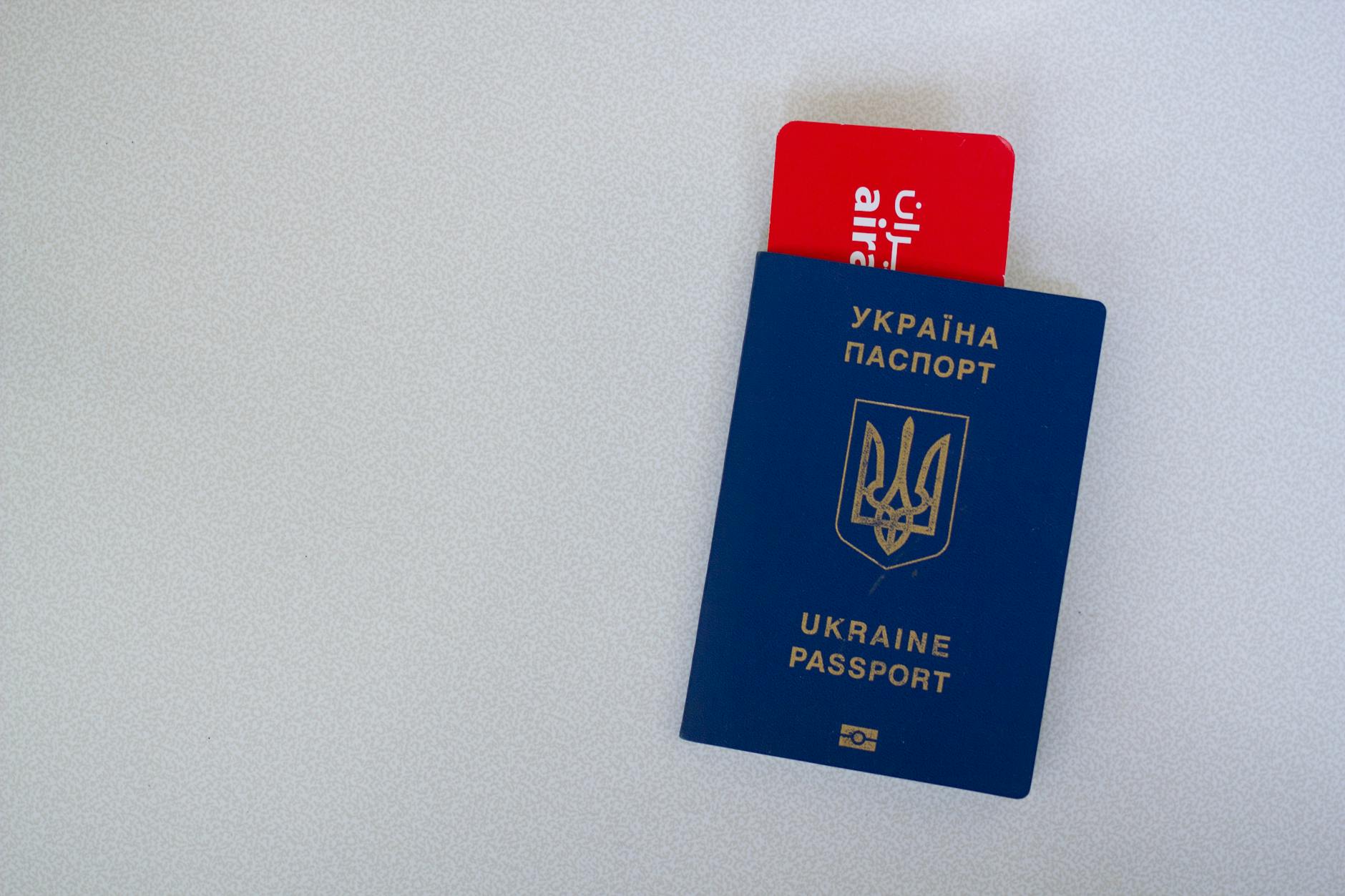
- Passport — Valid for 6+ months, with at least 2 blank visa pages
- Visa application form — Fill out online at the Chinese Visa Application Service Center website, print, and attach a photo
- Photo — White-background color photo taken within the last 6 months (48mm x 33mm), check specific requirements with the visa center
- Invitation letter — The most critical document (format below)
- Round-trip ticket and hotel booking — Some embassies/consulates require these
- Old passport — If you've renewed your passport, you may need to provide the old one
- Apply at: Chinese embassies or consulates in your country, or Chinese Visa Application Service Centers (most countries have visa centers that handle this)
Invitation Letter: The Key Document
The invitation letter must be issued by a company or institution within China and include:
- Inviter information — Company name, address, contact phone, contact person. Must bear the company's official seal (公章 gōng zhāng)
- Invitee information — Name (matching passport), gender, date of birth, nationality, passport number
- Purpose of visit — Clearly state the business activity (e.g., "business negotiations," "trade show attendance," "market research")
- Itinerary — Dates of visit, duration of stay, cities to visit
- Financial responsibility — Who covers costs in China (usually "inviter covers" or "invitee covers their own")
- Language — The invitation letter should be in Chinese or bilingual Chinese-English, printed on company letterhead, with the official seal
Search online for "M visa invitation letter template" and have your Chinese partner fill it in accordingly. As long as the key information is complete and the seal is affixed, it should pass.
Validity and Stay Period
The M visa comes in three validity types:
- 3-month single entry — Valid for 3 months, 1 entry only, each stay up to 30 or 60 days. Suitable for one-time business trips
- 6-month double entry — Valid for 6 months, 2 entries, each stay up to 30 or 60 days. For business activities requiring two round trips
- 1-year multiple entry — Valid for 1 year, multiple entries, each stay up to 30 or 60 days. For business people who frequently travel to China
- Stay period — The number of days you can stay after each entry, determined by the visa officer based on your application. M visas typically grant 30 or 60 days per entry
- Need to extend your stay? Go to the local Exit-Entry Administration in China to apply for a visa extension
Application Process
- Have your Chinese partner issue the invitation letter (with company seal)
- Fill out the application form online at the Chinese Visa Application Service Center website
- Book an appointment to submit materials
- Go to the visa center to submit documents and provide fingerprints (required for some countries)
- Wait for processing (standard 4-5 working days, express 2-3 working days)
- Collect passport and visa
- Visa fees vary by country and visa type, generally $30-140 USD (single entry $30-90, multiple entry $60-140)
M Visa vs Visa-Free: When to Use Which
- Visa-free entry — You can do "business exploration" (visiting companies, understanding the market, initial contacts), but cannot sign contracts, exhibit at trade shows, or conduct paid business activities. 30-day stay, no invitation letter needed
- M visa — Formal business visa: you can sign contracts, attend trade shows, conduct formal business negotiations. Requires invitation letter, 30-60 day stay per entry
- Recommendation: If you're just looking, chatting, and understanding the market, visa-free is sufficient. If you're formally signing contracts, exhibiting, or doing deep business negotiations, get an M visa for safety
- Using visa-free entry for formal business activities, if discovered, may affect future visa applications
- Z visa vs M visa — The Z visa is a work visa for those who have an employer in China, earn a salary, and live long-term. The M visa is for short-term business visits — you cannot work for pay in China on an M visa. If you want to work in China long-term, you need a Z visa + work permit — an M visa won't work
Important Notes
- Changing purpose after entry — If you enter on an M visa and your purpose shifts from business to tourism, generally no problem. But if it shifts from tourism to work, you need to apply for a Z visa — you cannot work in China on an M visa
- Multiple entry intervals — With a 1-year multiple entry M visa, each entry allows 30-60 days. After that, you must leave and re-enter. Some business people "exit for a day and re-enter" to reset the stay period, but frequent exits and entries may attract immigration attention
- Used up your entries — A 3-month single entry visa becomes invalid after one entry. To come to China again, you must reapply
- Visa fees — M visa fees vary by country and visa type, generally $30-140 USD. Express service costs extra
- Fingerprinting — Applicants from certain countries need to provide fingerprints (all 10 fingers) when submitting materials. Within the validity period, subsequent applications may not need re-fingerprinting. Check with your local embassy/consulate
Disaster Manual
Disaster Scenario 1: Invitation Letter Rejected — Visa Denied
Problem: Your Chinese partner wrote an invitation letter, but the visa officer says "incomplete information" and denies the visa.
What to do:
- Check if the invitation letter includes all required information (inviter info, invitee info, purpose, itinerary, financial responsibility)
- Confirm the letter has the company's official seal — letters without a seal are basically not accepted
- Have your partner reprint on company letterhead with complete information and re-seal
- Resubmit with supplementary materials — generally won't be denied again
Disaster Scenario 2: Visa Expiring Before Business Is Done
Problem: You entered on a 60-day M visa, but business activities are delayed and the visa is about to expire.
What to do:
- Go to the local Exit-Entry Administration before the visa expires to apply for a visa extension. Bring your passport, an extension explanation from the inviter, and proof of extended itinerary
- Extensions generally grant another 30 days, but approval is not guaranteed
- Don't overstay — even 1 day is illegal and affects future visas
- Lesson: When applying for the visa, build in a buffer based on your itinerary — don't cut it close
Disaster Scenario 3: Did Business Activities on Visa-Free Entry
Problem: You entered China on 30-day visa-free entry, exhibited at a trade show booth, signed contracts, and at departure, immigration questions your entry purpose.
What to do:
- Visa-free entry is for tourism, visiting family, and business exploration — not for signing contracts or exhibiting at trade shows
- If discovered doing formal business on visa-free entry, you may be warned, and future visa applications may face stricter scrutiny
- Recommendation: For formal business activities, honestly get an M visa. Visa-free is convenient but the risk isn't worth it
- Answer immigration questions truthfully at departure — don't lie. If you only had a few informal business meetings, generally there won't be an issue
Information verified: August 2026 · Sources: Ministry of Foreign Affairs Consular Department (cs.mfa.gov.cn), National Immigration Administration (nia.gov.cn), Chinese Visa Application Service Center (visaforchina.cn) · Visa policies may change — check with your local embassy/consulate for latest requirements.
The following are the author's personal QR codes (not merchant codes), with a fixed amount of ¥10.00 set for testing whether your card binding was successful.


About Personal QR Codes: This website is maintained by an individual. The QR codes are for personal daily use, not merchant codes. Since personal QR codes may not be able to accept international credit card payments, the transaction may fail. However, this does not mean your card binding failed — the fact that you reached the payment page itself confirms that your binding was successful.
About the Amount: Please do not modify the preset amount. This is simply a payment test. If the payment goes through, consider it as buying me a coffee. The fixed amount is set to avoid any inconvenience caused by accidentally entering the wrong amount.
Important: The primary purpose of these codes is to help you verify whether your registration and card binding were successful, not to generate profit. If you're not comfortable, feel free to skip this step.