Quick Answer (30 Seconds)
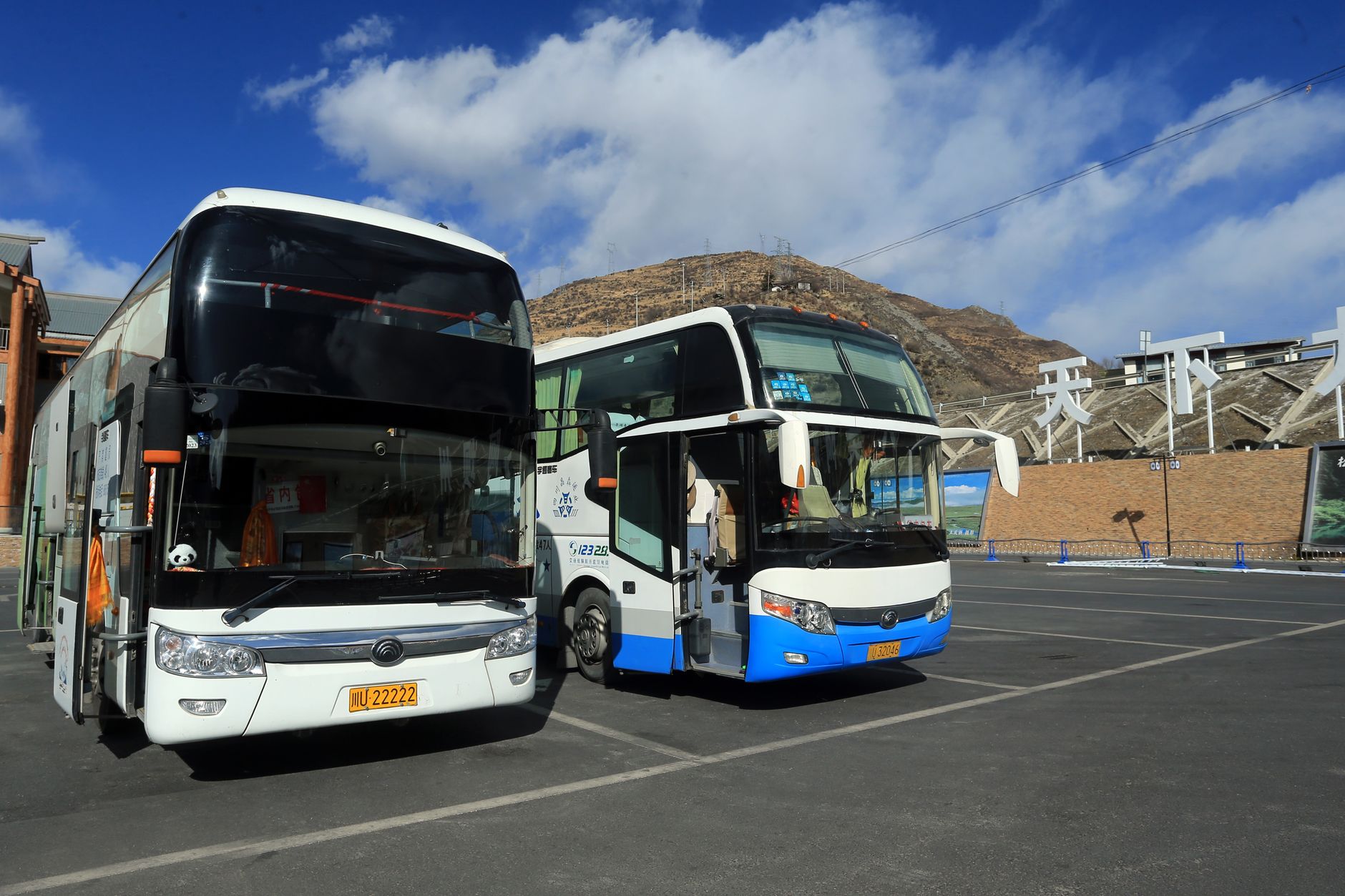
Long-distance buses are for when high-speed rail doesn't reach your destination, you're going to a remote area, or you want to save money. Buy tickets at the station counter, on Trip.com (Ctrip), or via 12306 bus tickets. Bus types: luxury coaches (reclining seats, AC, USB ports) and standard buses. Tickets cost 1/3 to 1/2 of high-speed rail, but the trip takes 2-3 times longer. Luggage goes in the bus's luggage compartment (free), small bags stay with you. The bus stops at highway rest areas (10-20 minutes) for bathroom breaks and snacks. Buckle your seatbelt. Don't take unlicensed vans (hēichē, 黑车). Take motion sickness medication 30 minutes before departure — mountain roads are twisty.
Bottom line: If high-speed rail goes there, take it. Buses are for the places rail can't reach.
Full Guide
I've taken countless long-distance buses in China — Chengdu to Jiuzhaigou, Lijiang to Lugu Lake, Urumqi to Turpan. Buses aren't the most comfortable option, but they take you places high-speed rail and planes can't. And they're cheap.
When to Take a Bus
Buses are irreplaceable in three scenarios in China:
- Remote areas with no high-speed rail — Jiuzhaigou, Daocheng Yading, Lugu Lake, Kanas, Wuyuan — many of these places have no train station. Buses are the only public transit.
- Saving money — Bus tickets cost 1/3 to 1/2 of high-speed rail. Example: Chengdu to Chongqing by high-speed rail ¥150 (1.5 hours), by bus ¥80-100 (3-4 hours).
- Short intercity hops — Between neighboring cities (Suzhou to Hangzhou, Dali to Lijiang), buses are sometimes more convenient than trains — more frequent departures, no need to arrive way ahead of time.
How to Buy Tickets
- Station counter — Go directly to the bus station ticket window. Good for same-day or 1-2 days ahead. Bring your passport (required for ticket purchase). Pro: no app needed. Con: long queues during peak season.
- Trip.com (Ctrip) — Search "bus tickets" (汽车票) in the app, select departure, pay online. Supports English interface, accepts passport info. You get an e-ticket — show your order info at the station to board.
- 12306 bus tickets — The 12306 app (China Railway's official booking platform) also has a bus ticket module for some cities, but coverage is less comprehensive than Trip.com.
- WeChat official accounts/mini-programs — Local bus stations have their own accounts/mini-programs (e.g., "Sichuan Bus Ticket Network"). You can buy online.
- Buy on-site — Most routes have same-day tickets available at the station, but peak season (Golden Week/summer holidays/Spring Festival) popular routes may sell out. Buy 1-2 days in advance to be safe.
Bus Types: Luxury vs Standard
- Luxury coaches — Wide, adjustable seats (135-160° recline), AC, some with USB charging ports, generous legroom. Slightly more expensive. Common on popular tourist routes (Chengdu-Jiuzhaigou, Lijiang-Dali, etc.).
- Standard buses — Narrower seats, less legroom, AC may be weak. Cheaper. Common on short intercity routes.
- Sleeper buses — China used to have "sleeper buses" (buses with beds), but in March 2012 the government suspended the production, sale, and registration of sleeper coaches. Existing sleeper coaches are being gradually phased out — they're essentially gone now. If someone tells you about "sleeper buses," they're working with outdated info.
- Mini coaches / commercial vehicles — Some short routes use 9-19 seat minibuses or vans. Flexible schedules, faster, but limited luggage space.
Luggage
- Bus luggage compartment — The side or rear of the bus has a luggage hold. Large suitcases go in free. Hand luggage to the driver/attendant when boarding, pick it up at your destination.
- Carry-on — Backpacks/handbags go on the overhead rack or at your feet.
- Limits — Luggage compartment space is limited. During peak season, oversized items may not fit. Generally 1-2 large bags per person is fine.
- Valuables — Passport, wallet, electronics stay with you. Never in the luggage compartment.
Rest Area Stops
- Buses stop at highway rest areas (usually every 2-3 hours, 10-20 minutes each stop).
- Rest areas have restrooms, convenience stores, and fast food. Prices are about 50% higher than in the city, but acceptable.
- Time management — The bus departs when the rest time is up. The driver won't wait for everyone. Memorize your bus license plate and exterior color so you don't board the wrong bus after the break. Set an alarm if needed.
- Restrooms may charge ¥1-2 or be free, depending on the rest area. Bring small change.
Motion Sickness
- Mountain routes (Jiuzhaigou, Daocheng, Lugu Lake) have many curves — easy to get carsick.
- Motion sickness medication (patches or pills) — take/apply 30 minutes before departure. Available at pharmacies and convenience stores, ¥5-15.
- Sit in the front (less bumping), look forward, don't look at your phone.
- Bring a plastic bag just in case. Buses generally don't provide vomit bags.
Things to Watch Out For
- Buckle up — Chinese law requires bus passengers to wear seatbelts, though many locals don't. Wear yours — seatbelts save lives, especially on mountain roads.
- Don't take unlicensed vans — "hēichē" (黑车, "black cars" — unlicensed private cars/vans) outside stations are a hard no. No insurance, unknown vehicle condition, no liability if there's an accident. Only buy tickets and board at official bus stations.
- Be on time — Buses depart on schedule. Arrive 15-20 minutes early to find your bus.
- Seat selection — Front rows (1-4) have less bumping and better views — choose these if you get motion sick. Back rows bump more but are closer to the restroom.
- Stay warm — Bus AC can be very cold. Bring a light jacket or shawl.
- Charging — Luxury coaches have USB ports, but not every seat. Bring a power bank just in case.
Bus vs High-Speed Rail vs Plane
- High-speed rail — Fast (200-350 km/h), high on-time rate, comfortable. Downside: doesn't cover everywhere, can't reach remote scenic areas.
- Bus — Wide coverage (even small county towns have routes), cheap. Downside: slow (average 60-80 km/h), affected by road conditions (traffic/road closures), less comfortable than rail.
- Plane — Fastest but most expensive. Good for long distances (1,000+ km). Airports are far from the city center (bus/train stations are usually downtown).
- Decision order — If high-speed rail goes there, take it. If rail doesn't reach and it's under 200 km, take the bus. Over 500 km, consider flying.
- The bus advantage — Routes go to county towns and scenic area entrances. High-speed rail stations are usually outside the city, requiring a transfer. Many remote scenic spots (Jiuzhaigou, Daocheng, Kanas) have buses that drive right to the entrance — far more convenient than rail + transfer.
Disaster Manual
Disaster Scenario 1: Bus Is Severely Delayed
Problem: Your bus was supposed to take 4 hours. You've been stuck in traffic for 6 hours and still haven't arrived.
What to do:
- Highway traffic jams are normal in China, especially during holidays and construction zones.
- Call your destination hotel to explain the situation and hold your room.
- No WiFi on the bus — download movies/music beforehand.
- If you truly can't wait: Check the bus's current location (Amap), see if there's a nearby train station to transfer.
- Lesson: When booking, leave buffer time — don't schedule a flight two hours after your bus arrives.
Disaster Scenario 2: Ended Up on an Unlicensed Van
Problem: You got waved into a "bus" outside the station. It turned out to be an unlicensed van — poor condition, overloaded, not taking the highway.
What to do:
- Before boarding — Official buses have operating permits, clear license plates, and depart from inside the station. Anyone actively soliciting passengers outside the station is 99% an unlicensed operator.
- Already on board — If you feel unsafe (overloaded/poor condition/driver seems off), get off at the next stop with people or a rest area. Call 110 (police).
- File a complaint — Keep payment records and photos of the license plate. Report to the local transport authority via 12328 (national transport service hotline).
- Safety first — Don't risk unlicensed vans to save money. No insurance, no compensation if there's an accident.
Disaster Scenario 3: Luggage Missing at Destination
Problem: You arrive and your suitcase isn't in the luggage compartment.
What to do:
- First ask the driver/attendant — sometimes passengers grab the wrong bag. The driver can help contact them.
- Go to the station service desk to register a lost item. Leave your contact info and a description of the bag.
- If it's not found that day, call the bus station to follow up.
- Most of the time, another passenger took it by mistake. It usually gets returned in a day or two.
- Prevention — Attach a luggage tag with your contact info (phone number/hotel card) to your bag. Photograph your suitcase — if it goes missing, you have a description ready.
Information verified: August 2026 · Sources: Ministry of Transport "Road Passenger Transport and Station Management Regulations," Trip.com bus ticket info, 12306 bus ticket platform · Schedules and prices may change — check actual listings.
The following are the author's personal QR codes (not merchant codes), with a fixed amount of ¥10.00 set for testing whether your card binding was successful.


About Personal QR Codes: This website is maintained by an individual. The QR codes are for personal daily use, not merchant codes. Since personal QR codes may not be able to accept international credit card payments, the transaction may fail. However, this does not mean your card binding failed — the fact that you reached the payment page itself confirms that your binding was successful.
About the Amount: Please do not modify the preset amount. This is simply a payment test. If the payment goes through, consider it as buying me a coffee. The fixed amount is set to avoid any inconvenience caused by accidentally entering the wrong amount.
Important: The primary purpose of these codes is to help you verify whether your registration and card binding were successful, not to generate profit. If you're not comfortable, feel free to skip this step.