Quick Answer (30 Seconds)
China has plenty of luggage storage options, and they're cheap. Train stations have self-service lockers and staffed counters (¥10-30/bag/day). Airports are pricier (¥30-50/bag). Hotels offer free storage after check-out — just leave it at the front desk. Malls sometimes have free lockers (first come, first served). Storage apps (Cún Zhī Jǐ / Tú Jiǎn Dān) cover many cities at ¥10-25/bag with online booking. Valuables (passport, wallet, electronics) stay with you — never in storage. Oversized bags (28"+) may not fit in self-service lockers — use the staffed counter.
Bottom line: If your hotel can hold it, leave it there. If not, use a storage app. Stations are the last resort.
Full Guide
My first time storing luggage in China was at Shanghai Hongqiao Railway Station. I'd been dragging a 24-inch suitcase around all morning and was miserable. When I saw the "Luggage Storage" (行李寄存, xínglǐ jìcún) sign, it felt like a rescue. After using storage more, I realized China has way more options than I expected — and they're absurdly cheap.
Train Station Storage
Train stations are the most common storage points. Major cities' high-speed rail stations almost all have them:
- Self-service lockers — Usually near the waiting hall or exit corridors. Three sizes: small (backpack, ¥10-15/day), medium (20" suitcase, ¥15-25/day), large (24-28" suitcase, ¥20-30/day). Scan QR code to open, scan again to retrieve. Fully self-service, supports WeChat/Alipay.
- Staffed counters — Windows labeled "Luggage Storage" (行李寄存). Charged per piece, ¥10-30/bag/day. Good for oversized items (28"+, bicycles, strollers — things that don't fit in lockers).
- Location — Not every station has them. Before you go, search on Amap for "[station name] + luggage storage" to confirm. Some storage points are in commercial areas outside the station, not inside.
Note: Station lockers fill up during peak season (Golden Week, Spring Festival). Arrive early for a better chance. Some lockers have a maximum storage time (usually 72 hours) — overdue items may be cleared out.
Airport Storage
- Price — More expensive than stations. Usually ¥30-50/bag/day, more for oversized items.
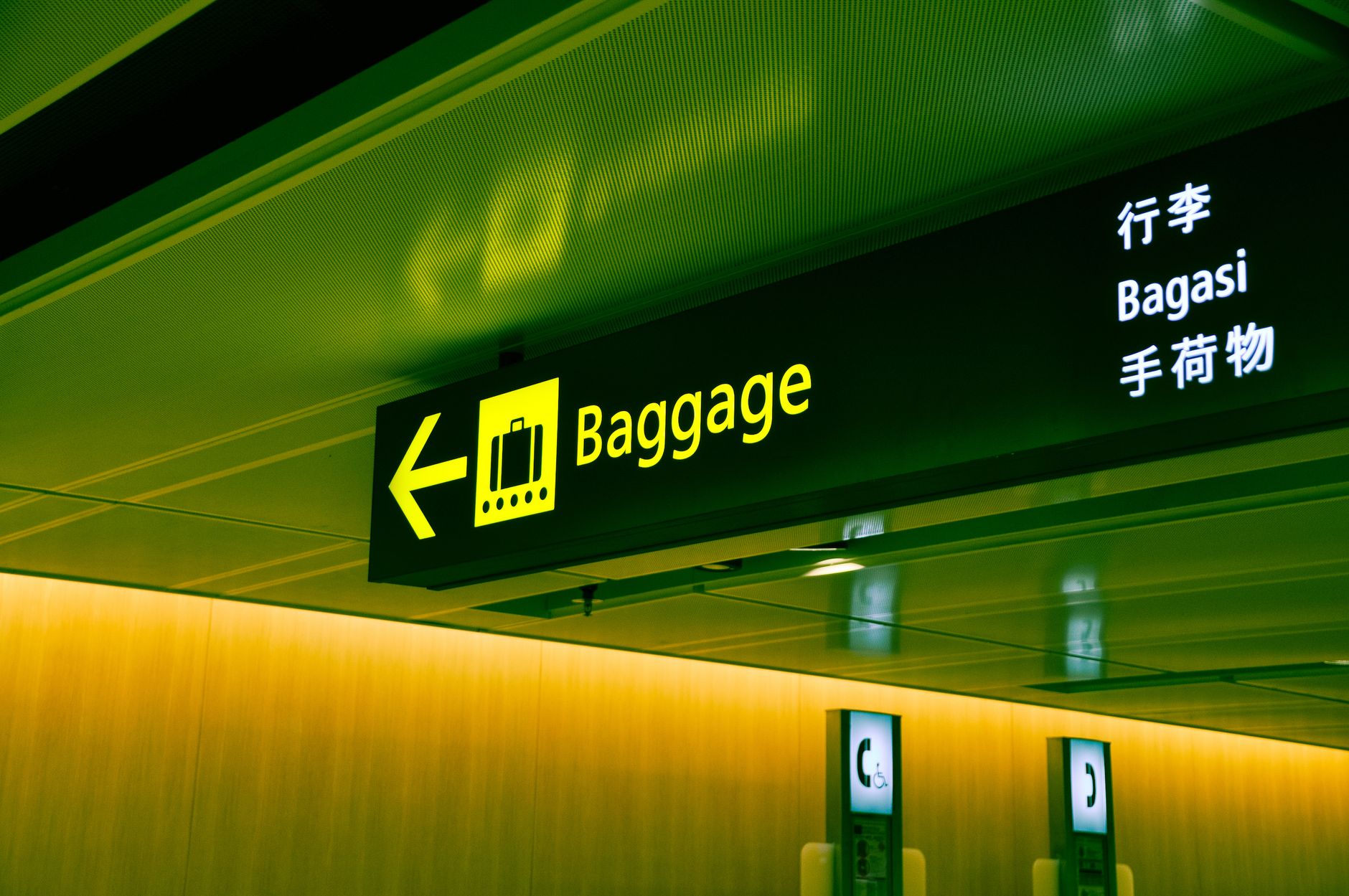
- Location — Both international and domestic departure areas have storage counters. Follow the "Baggage Storage / 行李寄存" signs.
- When to use — Long layovers or arriving at the airport too early. If it's not strictly necessary, airport storage is the worst value.
- Beijing Capital Airport, Shanghai Pudong Airport, Guangzhou Baiyun Airport all offer 24-hour storage.
Hotel Storage (Most Recommended)
- Free storage after check-out — This is the best deal. When checking out, tell the front desk "I'm leaving this afternoon/evening, can you store my luggage?" Nearly all hotels offer this for free.
- Storage before check-in — If your train/flight arrives early and the room isn't ready, you can also leave bags at the front desk and go explore.
- Limitations — Generally same-day pickup. Overnight storage may not be possible. Ask about the latest pickup time in advance.
- International chains (Marriott, Hilton, etc.) and budget hotels (Home Inn, Hanting, JI Hotel, etc.) all provide free storage — it's an industry standard.
Mall Lockers
- Many large malls (Wanda, Joy City, Taikoo Li, etc.) have free lockers near the first floor or underground parking entrance.
- First come, first served. May be full during peak times. Generally only fits small-medium items (backpacks, shopping bags) — not large suitcases.
- Great for freeing your hands while shopping. Not worth making a special trip just to store bags.
Luggage Storage Apps
China has two dedicated luggage storage platforms with wide coverage:
- Cún Zhī Jǐ (存知己) — Covers 50+ cities. Storage points are in shops (convenience stores, cafés, etc.) near stations, attractions, and commercial districts. ¥10-25/bag/day. Book online, choose time and location, show order code at the shop. Includes insurance.
- Tú Jiǎn Dān (途简单) — Similar model, covers 40+ cities, ¥10-20/bag/day.
- How to use — Search "存知己" or "途简单" in WeChat mini-programs. Select city and location, choose storage time, pay, then show the order code at the shop to store.
- Pros — Many locations (including near attractions), transparent pricing, insured, bookable in advance to guarantee a spot.
- Cons — Points are partner shops, so service quality varies. Oversized items may cost extra.
Pricing and Safety
- Price reference — Station self-service lockers ¥10-30/day, staffed counters ¥10-30/bag, airports ¥30-50/bag, hotels free, storage apps ¥10-25/bag.
- Safety — Station and airport storage points have surveillance cameras and are generally safe. App storage points are insured. But valuables must stay with you — passport, wallet, phone, laptop, jewelry. Never store these.
- Retrieval — Self-service: scan QR code. Staffed: you get a claim tag — don't lose it. Hotel: show room key or give room number.
Best Choice by Scenario
Here's my priority order — just follow this:
- Checking out of a hotel same day — Hotel front desk free storage is the first choice. Most convenient, safest, and if the hotel is near attractions, drop and go.
- Just arrived, haven't checked in — If the hotel is downtown, go store there first. If the hotel is far (e.g., near the airport), find a storage app point near the station/attractions.
- Transit between cities — Arrived in a new city, don't want to drag luggage to the hotel? Store at the station first, explore light for half a day, then pick up and head to the hotel.
- Rainy day / big shopping day — Mall free lockers are most convenient. Shop, then pick up on the way out. No dragging luggage in the rain.
What You Can't Store
- Flammable/explosive items — Lighters, aerosol cans, alcohol. Security and storage points won't accept them.
- Fresh/perishable food — Strong odors, leaking — not accepted.
- Live animals — Don't even think about it.
- Oversized/overweight items — Self-service lockers have size limits. 28"+ suitcases may not fit — use staffed storage. Bicycles and strollers require staffed storage.
Storage Duration and Fees
Most storage points charge per 24-hour cycle, not per "day":
- Self-service lockers: Going over 24 hours automatically adds a day's fee, charged when you scan to retrieve.
- Staffed counters: Also charge per day. Going past the latest pickup time (usually 10-11 PM) counts as the next day.
- Storage apps: More flexible — some charge hourly (¥2-5/hour), switching to daily after a threshold.
- Hotel free storage: Usually same-day pickup only. Ask about overnight options.
- Recommended: Don't store longer than 48 hours. Long-term storage may result in items being moved or cleared.
Disaster Manual
Disaster Scenario 1: Lockers Are Full
Problem: You arrive at the train station, all self-service lockers are taken, and the staffed counter has a 20-person queue.
What to do:
- Open the "Cún Zhī Jǐ" or "Tú Jiǎn Dān" WeChat mini-program and search for nearby storage points — they may have availability.
- Or try asking a nearby hotel if they'll store your bag for a small fee (some hotels accommodate non-guests).
- Last resort: Drag your luggage along. Many attractions (the Forbidden City, museums, etc.) have luggage storage — but you need a ticket to use it.
- Lesson: During peak travel times, book a storage app point in advance.
Disaster Scenario 2: Lost Your Claim Tag
Problem: You stored your luggage, explored all afternoon, and come back to find the claim tag is gone.
What to do:
- Don't panic. Go to the storage counter, show your passport, explain when you stored it, and describe your bag (color, size, brand).
- Staffed counters will verify your identity and luggage details before releasing.
- Self-service lockers don't have this problem — just scan the QR code.
- If staff ask you to wait for verification, be patient — it's to prevent fraud.
Disaster Scenario 3: Storage Overrun, Extra Fees
Problem: You said you'd pick up by 6 PM, lost track of time, and returned at 10 PM.
What to do:
- Self-service: Overtime is charged as an extra day. Scanning to retrieve auto-deducts via WeChat/Alipay.
- Staffed: Explain to staff and pay the overtime fee (usually half a day or one day's rate).
- Storage apps: Also auto-charge overtime fees. Pay in the app.
- If it went overnight — some points have a maximum (e.g., 72 hours). Overdue items may be moved elsewhere. Contact the storage point in advance.
- Lesson: Set a phone alarm for your pickup time.
Information verified: August 2026 · Sources: China Railway 12306 customer service info, official info from station/airport websites, "Cún Zhī Jǐ" and "Tú Jiǎn Dān" WeChat mini-programs · Prices and locations may change — check on site.
The following are the author's personal QR codes (not merchant codes), with a fixed amount of ¥10.00 set for testing whether your card binding was successful.

About Personal QR Codes: This website is maintained by an individual. The QR codes are for personal daily use, not merchant codes. Since personal QR codes may not be able to accept international credit card payments, the transaction may fail. However, this does not mean your card binding failed — the fact that you reached the payment page itself confirms that your binding was successful.
About the Amount: Please do not modify the preset amount. This is simply a payment test. If the payment goes through, consider it as buying me a coffee. The fixed amount is set to avoid any inconvenience caused by accidentally entering the wrong amount.
Important: The primary purpose of these codes is to help you verify whether your registration and card binding were successful, not to generate profit. If you're not comfortable, feel free to skip this step.