Quick Answer (30 seconds)
China has three types of sleeper trains: hard sleeper (yìng wò, 6-berth open compartment, ¥200-400, most economical), soft sleeper (ruǎn wò, 4-berth private cabin with door, ¥300-500, quiet and comfortable), and D-series sleeper (dòng wò, high-speed D-train sleeper, faster but pricier). Buy tickets on the 12306 app or website, select your sleeper type. Upper berth is cheapest but smallest, middle is in between, lower is priciest but most convenient. Power outlets are limited (soft sleeper has one per berth, hard sleeper has them in the corridor). The train attendant will wake you before your station. Great for 10+ hour overnight trips — saves a night's hotel and way more comfortable than a bus.
Full Guide
I've taken more than twenty sleeper trains in China, from Beijing to Kunming — 38 hours in a hard seat (don't be like me). Honestly, sleeper trains are the romance of long-distance travel in China — watching the scenery change from northern plains to southern rice paddies, falling asleep to the rhythm of the tracks, waking up in a different city. But only if you know how to buy, choose, and not get miserable.
Three Sleeper Types: How to Choose
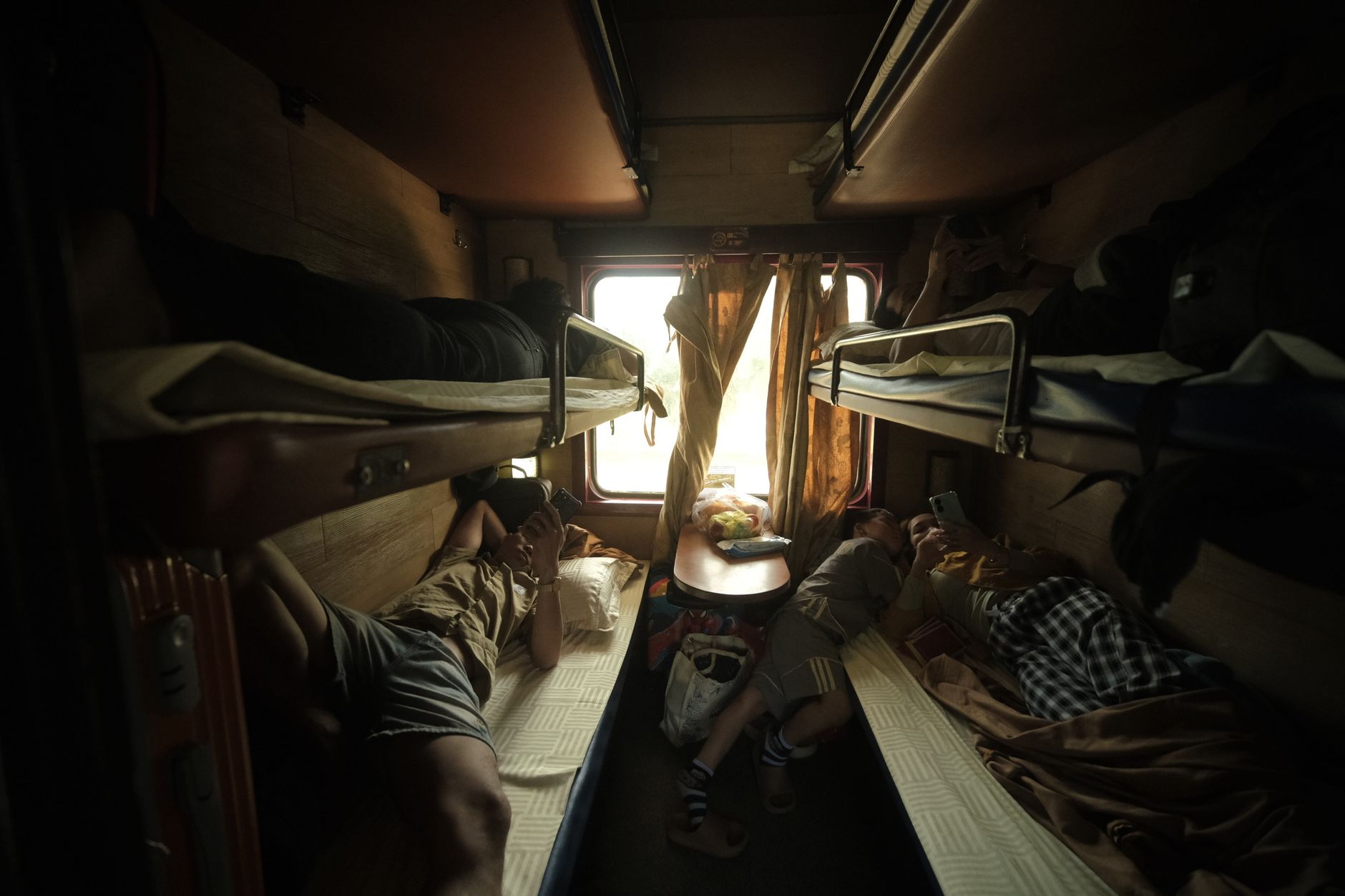
- Hard sleeper (yìng wò) — Open compartment with 6 berths (upper, middle, lower × 2), no door. Most affordable, ¥200-400 (depending on distance). Berths are narrow and firm, but you can lie flat and sleep. The corridor has fold-down seats where you can sit and watch the scenery during the day. Good for budget travelers who don't mind the lack of privacy.
- Soft sleeper (ruǎn wò) — Enclosed 4-berth cabin with a sliding door. ¥300-500, about 50%-80% more than hard sleeper. Berths are wider and softer, each with its own power outlet and reading light. Quiet and private — good for families with kids or anyone who wants a proper night's sleep.
- D-series sleeper (dòng wò) — Sleeper berths on D-series high-speed trains. Speed approaches high-speed rail. Comes in 4-berth and 2-berth cabins. Most expensive (¥400-800), but travel time is much shorter. For example, Beijing to Shenzhen: regular sleeper takes 24 hours, D-series sleeper takes 12. For people who want the sleeper experience without losing a whole day.
Buying Tickets on 12306: Choosing Your Sleeper Type
- Download the 12306 app (China Railway's official ticketing platform) or visit 12306.cn in your browser. Registration requires your passport — select "护照" (passport - hù zhào) as ID type.
- Search departure and destination, select your date. In the train list, look at the train number prefix: K/T/Z trains are regular-speed (with hard and soft sleepers), D trains are high-speed (with D-series sleepers).
- After selecting a train, choose berth type: hard sleeper, soft sleeper, or D-series sleeper. The system auto-assigns upper, middle, or lower.
- Upper/middle/lower price difference: Lower is most expensive (you can sit up comfortably), upper is cheapest (smallest space, you'll hit the ceiling sitting up). The system assigns randomly by default, but you can manually select a preference in 12306's seat selection feature — though popular trains may not have options.
- After purchase, just scan your passport at the station gate. No paper ticket needed.
Carriage Layout and Berths
- Hard sleeper carriage — Each open compartment has 6 berths (upper/middle/lower × 2), no door. Upper berth is very close to the ceiling — you can't sit up straight. Middle is slightly better. Lower doubles as a daytime seat — everyone sits on it and chats. Across from the compartment, the corridor side has fold-down seats and a small table.
- Soft sleeper carriage — Each 4-berth cabin (upper/lower × 2) has a sliding door that locks from inside. The cabin has a small table, power outlets, reading lights, and coat hooks. Much quieter than hard sleeper, but being locked in a small cabin with 3 strangers can be slightly awkward.
- D-series sleeper carriage — Similar to soft sleeper but newer. Some have 2-berth cabins (premium soft sleeper) with more space.
Luggage Safety
- Large bags go on the luggage rack under the berth, or at the large luggage area at each end of the carriage. Hard sleeper corridors also have overhead racks.
- Valuables (passport, phone, wallet) go under your pillow or close to your body. When sleeping, put your bag by your feet or hang it on the hook at your berth.
- Chinese trains are generally very safe — theft is rare. But don't leave your phone on the table and fall asleep.
- Bring a small padlock to lock your backpack zippers.
Charging and Washing
- Power outlets — Soft sleeper has individual outlets at each berth (220V Chinese standard 2-pin/3-pin — you'll need an adapter for EU/UK plugs). Hard sleeper outlets are on the corridor wall, limited in number, and you'll need to queue. D-series sleepers have the best charging facilities. Bring a power bank — don't count on the train always having available power.
- Washing — Each carriage has restrooms and a hot water station. Restroom conditions are basic (especially in hard sleeper) — bring wet wipes and hand sanitizer. The hot water station provides boiling water 24/7 — instant noodles are the soulmate of sleeper trains.
- Toilets — Hard sleeper has squat toilets, soft sleeper may have seated ones. Bring your own tissue — train toilet paper runs out frequently.
Nighttime Station Arrival
- The train attendant (chéng wù yuán) will come wake you 15-20 minutes before your station, or mark your arrival time on the berth card in advance.
- But don't rely entirely on the attendant — set your own phone alarm. It's more reliable.
- If your station is in the middle of the night, pack your luggage in advance and have it ready on your berth. Don't wait until arrival to scramble around looking for things.
- If your arrival is at 3 AM, give the attendant a heads-up: "I'm getting off at XX station, please wake me."
Food and Drink on the Train
- There's a dining car (usually in the middle of the train) serving boxed meals and stir-fries, ¥25-50, taste is mediocre.
- Strongly recommend bringing your own: instant noodles, snacks, fruit, water. The hot water station means instant noodles anytime — it's a sleeper train ritual.
- Soft sleeper cabins can order food delivered from the dining car — better service than hard sleeper.
Troubleshooting
Problem 1: Stuck with the Upper Berth
What happens: You find yourself assigned to the upper berth, where you can barely sit up and turning over is a struggle.
Fix: When buying on 12306, you can manually select your berth (choose lower), but popular routes sell out lower berths instantly — you may not get one. After boarding, try asking the lower berth passenger to swap ("Can I pay you the difference to switch?") — younger travelers are usually easygoing about it. If you can't swap: spend more time in the corridor during the day, crawl up at night. Upper berth has its perks — nobody sits on your bed, relatively peaceful. Bring an eye mask and earplugs — the upper berth gets more light and noise.
Problem 2: Phone Dead, No Outlet Available
What happens: All the corridor outlets in hard sleeper are taken, and your phone is about to die.
Fix: Your power bank is your lifeline — charge it fully before boarding. Go to the dining car, buy a tea or meal, and ask the dining car staff to help you charge — they usually agree. If you're in hard sleeper, you could politely ask a soft sleeper passenger to borrow their cabin outlet (but it's far away, not very practical). Lesson learned: bring at least a 10,000mAh power bank on sleeper trains.
Problem 3: Missed Your Station
What happens: You fell asleep and woke up past your station.
Fix: Find the attendant immediately and explain. Chinese railway rules state: passengers who miss their station can be sent back for free. The attendant will arrange for you to get off at the next station and take a return train back. Don't panic — it's not a big deal, attendants handle this routinely. But it will cost you a few hours, so set that alarm.
Last verified: August 2026 · Sources: China Railway 12306 official website (12306.cn), China Railway Customer Service · Ticket prices and train schedules may change — check 12306 for current information.
The following are the author's personal QR codes (not merchant codes), with a fixed amount of ¥10.00 set for testing whether your card binding was successful.
About Personal QR Codes: This website is maintained by an individual. The QR codes are for personal daily use, not merchant codes. Since personal QR codes may not be able to accept international credit card payments, the transaction may fail. However, this does not mean your card binding failed — the fact that you reached the payment page itself confirms that your binding was successful.
About the Amount: Please do not modify the preset amount. This is simply a payment test. If the payment goes through, consider it as buying me a coffee. The fixed amount is set to avoid any inconvenience caused by accidentally entering the wrong amount.
Important: The primary purpose of these codes is to help you verify whether your registration and card binding were successful, not to generate profit. If you're not comfortable, feel free to skip this step.