Quick Answer (30 Seconds)
One-sentence summary of the best time to visit China: Autumn (September-November) is universally excellent — comfortable weather, beautiful scenery, fewer crowds. Spring (March-May) is for flowers (Beijing/Jiangnan), but the south gets damp. Summer (June-August) is for escaping the heat (Yunnan/Qinghai/Harbin) — avoid the southern sauna. Winter (December-February) is for snow in Harbin/Jilin, or warmth in Hainan/Yunnan. Absolutely avoid Golden Week (October 1-7) and summer school holidays (July-August) — crowds everywhere, prices doubled. Detailed city-by-city recommendations below.
Bottom line: If you can come in autumn, do it. Avoid Golden Week and summer peak — you've already won 80% of the China travel experience.
Full Guide
I've lived in China for five years and traveled in every season. I've stepped in the classic traps: National Day at Jiuzhaigou, stuck in traffic for three hours without moving. Since then I've learned — in China, choosing the right time matters more than choosing the right place.
Spring (March-May): Flower Season
Spring is China's most beautiful but unpredictable season:
- March — South warms up, north is still cold. Wuhan cherry blossoms (mid-late March), Wuyuan rapeseed flowers (mid-March). Weather is changeable — dress in layers.
- April — Nationwide warming, the best spring travel month. Luoyang peonies (mid-April), Beijing Yuyuantan cherry blossoms (early April), Yangzhou in spring bloom. 15-25°C, comfortable.
- May — Approaching early summer. North around 25°C, south starts getting hot. May Day holiday (May 1-5) is crowded — avoid.
Spring destinations:
- Beijing — Best in April. Comfortable temperature, Forbidden City and Great Wall in perfect weather.
- Jiangnan (Suzhou/Hangzhou/Yangzhou) — March-April, "spring in Yangzhou." Water town spring scenery.
- Wuhan — March, cherry blossoms at Wuhan University, flowers across the city.
- Luoyang — Mid-April, peony festival.
- Wuyuan — March, rapeseed flower terraces, one of China's most beautiful villages.
Note: Southern China gets "huí nán tiān" (回南天) in March-April — walls sweat, clothes won't dry, humidity that makes you question reality. Check local weather before booking.
Summer (June-August): Heat Escape Season
Most of China is hot and humid in summer, but there are cool havens:
- Yunnan (Kunming/Dali/Lijiang/Shangri-La) — 20-25°C in summer, China's best heat escape. Rainy season (June-August) brings showers, but they come and go fast.
- Qinghai (Xining/Qinghai Lake/Chaka Salt Lake) — 15-25°C in summer, rapeseed flowers (July) + salt lake + grasslands — stunning.
- Xinjiang (Ili/Kanas) — 20-30°C in summer, Ili lavender (June), Kanas at its best (July-August).
- Harbin — 20-28°C in summer, one of China's coolest major cities. Harbin Summer Music Festival.
- Guizhou (Guiyang/Libo/Huangguoshu) — Around 25°C in summer. "Refreshing Guiyang" isn't just a slogan.
Places to avoid in summer:
- Southern furnaces (Wuhan/Changsha/Chongqing/Nanjing) — 38-40°C + high humidity, feels like 45°C+.
- Beijing — July-August is muggy with occasional heavy rain.
Summer school holidays (July-August) are China's peak travel season. All attractions are packed, hotel prices surge. If possible, avoid July 15 - August 20.
Autumn (September-November): The Best Season
Autumn is China's golden travel season — stable weather, comfortable temperatures, the most beautiful scenery:
- September — Comfortable nationwide (15-25°C). Summer holidays are over, crowds are thinner. But the Mid-Autumn Festival (September) brings a mini-peak.
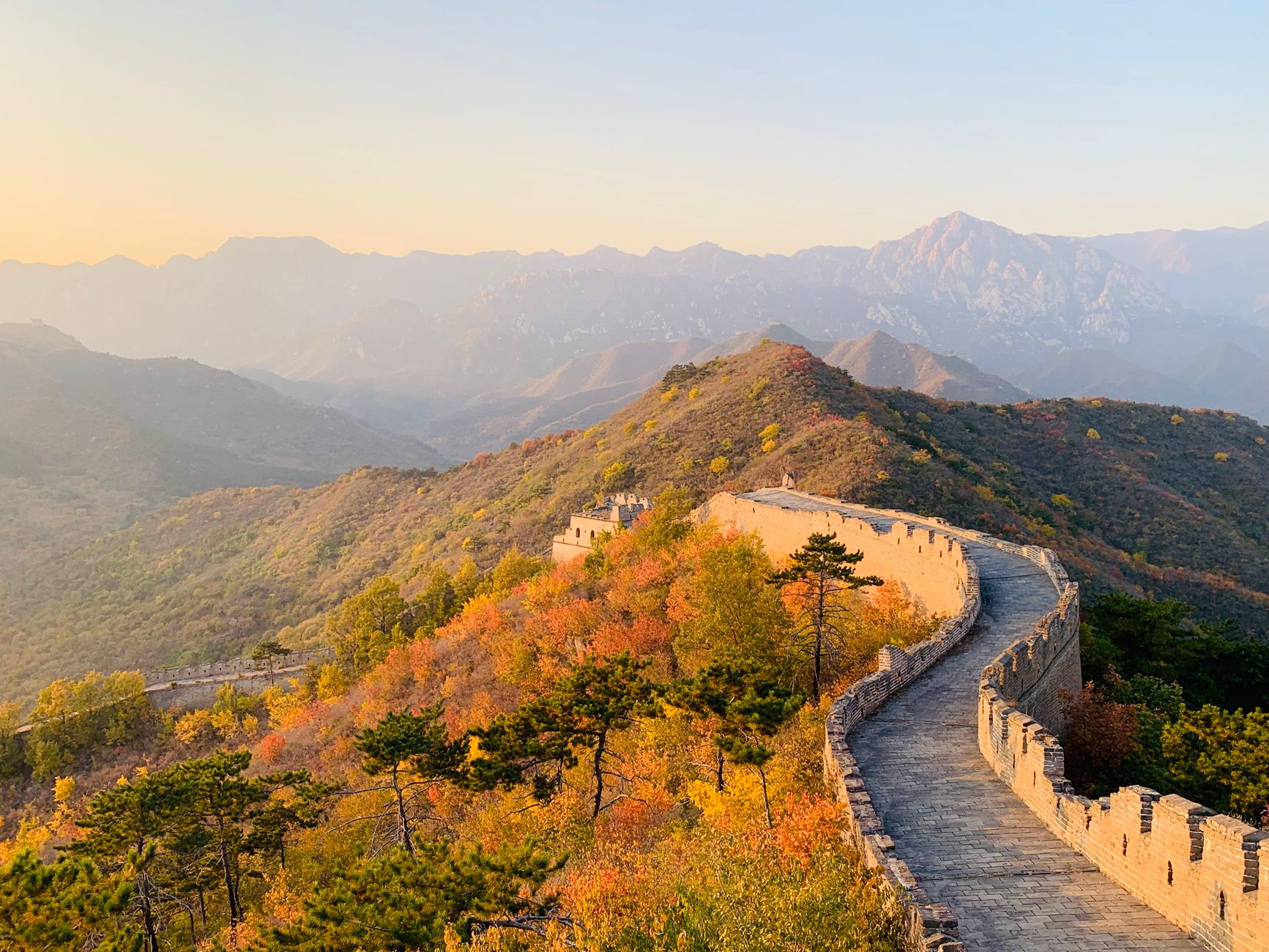
- October — The most beautiful month. Beijing Fragrant Hills red leaves, Kanas golden autumn, Inner Mongolia Ejina poplar forest. But National Day Golden Week (October 1-7) is hell mode — everyone is on the road, hotel prices triple, attractions are packed even with capacity limits. October 8 onward instantly becomes paradise.
- November — North starts getting cold (5-15°C), but the south is still comfortable (15-25°C). Fewer people, lower prices — the best value travel month.
Autumn destinations:
- Beijing — Mid-late October red leaves (Fragrant Hills/Badaling/Summer Palace). The Forbidden City is at its most beautiful in autumn sun.
- Xinjiang · Kanas — Mid-September golden autumn, white birch forests in gold. China's most beautiful autumn scenery.
- Inner Mongolia · Ejina — October, poplar forests — a golden sea.
- Jiuzhaigou — October-November, colorful forests + turquoise water. The most beautiful season.
- Nanjing — November, Qixia Mountain red leaves + Ming Xiaoling Mausoleum ginkgo trees.
Winter (December-February): Snow and Warmth
Winter in China splits into two worlds — northern ice, southern warmth:
- Harbin — December-February, Ice and Snow World (opens late December), Central Street, Yabuli skiing. Minus 20-30°C, but worth it.
- Jilin — January, rime ice island (wùsōng, 雾凇). A frozen wonder on the Songhua River — one of China's four natural wonders.
- Changbai Mountain — December-February, skiing + hot springs. Heaven Lake frozen solid.
- Mohe — China's northernmost point. December-January, experience minus 40°C and maybe the Northern Lights (if you're lucky).
- Hainan (Sanya/Haikou) — December-February, 20-25°C, a warm escape. Peak season — book early and expect higher prices.
- Yunnan (Xishuangbanna/Kunming) — 15-25°C in winter, warm and comfortable.
- Tibet (Lhasa) — Winter days are sunny and warm (10-15°C), few tourists, no need to fight for Potala Palace tickets. But altitude sickness risk remains.
Quick Reference: Best Months by City
- Beijing — April-May (spring), September-October (autumn)
- Shanghai — April-May, October-November
- Xi'an — March-May, September-November
- Chengdu — March-June, September-November
- Yunnan (Kunming/Dali/Lijiang) — March-May, September-November (year-round works)
- Tibet (Lhasa) — May-October (winter possible but altitude risk)
- Xinjiang (Kanas) — July-September (September is most beautiful)
- Harbin — December-February (ice/snow), June-August (heat escape)
- Hainan — October-April (avoid typhoon season)
- Jiuzhaigou — September-November (autumn is most beautiful)
- Huangshan — April-May (flowers), September-November (autumn colors), December-February (winter snow and rime ice)
Peak Season Avoidance Guide
- National Day Golden Week (October 1-7) — The most terrifying week of the year. 700+ million people traveling simultaneously. Do not travel during this period. If you must, choose off-the-beaten-path destinations (small northwestern/southwestern towns).
- Spring Festival (January-February, dates vary) — 7-day holiday, Spring Festival travel rush, train tickets sell out, hotels surge. Southern cities + Hainan are most crowded.
- Summer holidays (July 15 - August 20) — Student travel peak, attractions packed. Choosing a heat-escape destination is fine, but book accommodation early.
- May Day (May 1-5) — 5-day holiday, popular attractions crowded. Short trips OK, long trips avoid.
- Mini-holidays (Qingming/Dragon Boat/Mid-Autumn) — 3-day holidays, local travel peaks. Long-distance travel is less affected.
Best Value by Season
If you want the best experience for the least money, choose your timing in this order:
- Best value: November — Golden Week crowds just left, weather is still comfortable (south 15-25°C), hotel prices at a low, no lines at attractions. If you can choose your time, November is the best month to visit China.
- Runner-up: March — Spring Festival just ended, temperatures rising, few tourists. The north is still a bit cold (5-15°C), but the south is already blooming.
- Peak season to avoid: July-August — Summer holiday travel peak, hotel prices up 30-50%, attractions packed. If you must come in summer, pick a heat-escape destination (Yunnan/Qinghai/Guizhou), avoid southern furnace cities.
- Worst choice: October 1-7 — National Day Golden Week. If this is your only option, choose the most obscure destination possible (small northwestern town / northeastern border). Do not go to popular attractions.
Disaster Manual
Disaster Scenario 1: Went to a Popular Attraction During Golden Week
Problem: You arrive at Jiuzhaigou on October 3. Two-hour queue at the entrance. More people than trees inside.
What to do:
- If you haven't left yet: Change your itinerary immediately. Go to an off-the-beaten-path destination (northwest/northeast/southwestern small towns).
- If you're already there: Go early (before 6 AM), choose less popular routes, and accept that "crowds are part of National Day."
- October 8 onward is the golden window — crowds gone, scenery still there, prices down. If you can extend your stay, do it.
Disaster Scenario 2: Heatstroke in Southern Summer
Problem: You go to Wuhan/Chongqing/Changsha in July. 38°C + high humidity. Ten minutes outside and your shirt is soaked through.
What to do:
- Adjust your schedule: Go out 6-10 AM, stay indoors 10 AM - 4 PM (museums/malls/cafés), come back out in the evening.
- Carry water and sun protection. Take breaks in air-conditioned places.
- If it's truly unbearable: Switch to a heat-escape destination (Yunnan/Qinghai/Guizhou), or head north (Harbin/Inner Mongolia).
Disaster Scenario 3: Didn't Pack Enough for Southern Winter
Problem: You assumed "southern winters aren't cold." You visit Shanghai in December with only a thin jacket. It's 5°C, damp cold, no heating indoors. You can't sleep from the cold.
What to do:
- Buy thermal underwear (¥79-149) and a light down jacket (¥199-399) at Uniqlo or Decathlon — available in any city.
- If the hotel doesn't have an electric blanket, ask the front desk for heat packs or a space heater.
- Turn on the AC heating mode (many southern hotel ACs have a heat function). Keep windows closed.
- Lesson: Southern winter cold is a magic attack — the temperature doesn't look that low (0-10°C), but the damp cold + no heating makes it feel worse than minus 10°C in the north. Bring the down jacket and long johns — don't skip them.
Information verified: August 2026 · Sources: National Climate Center of the China Meteorological Administration (ncc.cma.gov.cn), China Weather (weather.com.cn), public info from city tourism departments · Best travel times are based on climate and historical patterns. Actual weather may vary — check forecasts closer to your trip.
The following are the author's personal QR codes (not merchant codes), with a fixed amount of ¥10.00 set for testing whether your card binding was successful.


About Personal QR Codes: This website is maintained by an individual. The QR codes are for personal daily use, not merchant codes. Since personal QR codes may not be able to accept international credit card payments, the transaction may fail. However, this does not mean your card binding failed — the fact that you reached the payment page itself confirms that your binding was successful.
About the Amount: Please do not modify the preset amount. This is simply a payment test. If the payment goes through, consider it as buying me a coffee. The fixed amount is set to avoid any inconvenience caused by accidentally entering the wrong amount.
Important: The primary purpose of these codes is to help you verify whether your registration and card binding were successful, not to generate profit. If you're not comfortable, feel free to skip this step.