Quick Answer (30 Seconds)
Taking photos in China is fine in most places, but there are absolute no-go zones: Military facilities (barracks, ports, border defense) — strictly prohibited. If you see a "military restricted area" (军事禁区 jūn shì jìn qū) sign, put your phone away immediately. Government buildings (Zhongnanhai, etc.) — restricted photography in surrounding areas. Museums — some galleries prohibit photos or flash, check the signs. Temple halls — photography usually prohibited inside. Airport security areas — no photos throughout. Subway — generally OK but don't photograph people's faces. Drones — require real-name registration, and city core areas are basically no-fly zones. Photographing strangers? Ask for permission first — don't sneak photos. Casual phone photography is fine, but ignoring the above rules can mean being asked to delete photos or being taken in for questioning.
Remember: If you see a "No Photography" sign, put your phone away. Don't push your luck.
Full Guide
I've been photographing in China for five years and got stopped by security twice — once for photographing a security checkpoint area on a subway platform, once for raising my phone in a museum's no-photography gallery. Both times, it was "please delete the photo" and I was let go — but it was definitely awkward. Here's a clear guide to where you can and can't shoot.
Military Facilities: Absolute No-Go
- Barracks, military ports, military airfields — Strictly no photography. If you see "military restricted area" (军事禁区) or "military management zone" (军事管理区) signs, put away your phone and camera immediately — don't linger
- Border posts and boundary lines — Some areas along the China-Vietnam, China-Myanmar, and China-DPRK borders are military control zones. Photography may be stopped by border guards
- Military vehicles and equipment — If you see a military convoy on the road, don't photograph it. You may be asked to delete photos, or in serious cases, taken to a police station for questioning
- Simple rule: if there's barbed wire, guard posts, or signs with "military" (军事) text, walk away and keep your phone down
Government Buildings: Restricted Zones
- Zhongnanhai (Beijing) — Headquarters of the CPC Central Committee and State Council. The surrounding area (parts of Chang'an Avenue, Fuyou Street) has strict photography restrictions. Security and plainclothes officers patrol — raising your phone toward the compound will get you stopped
- Provincial and municipal party/government buildings — Generally no explicit no-photography signs around local government compounds, but don't photograph the main entrance or security checkpoints
- Courts and procuratorates — Building exteriors are generally fine, but interiors and courtrooms are strictly no-photography
- Walking and taking photos outside government compound walls is fine — just don't point your camera at entrances and security facilities
Museums: Check the Signs
- National Museum of China — Some galleries allow photography but no flash, while special exhibitions or specific artifact galleries clearly state "no photography"
- Palace Museum (Forbidden City) — Outdoor areas you can photograph freely. Some indoor galleries (like the Treasure Gallery, Clock Gallery) prohibit photography
- Shaanxi History Museum — Generally allows photography, but no flash or tripods
- Shanghai Museum — Some galleries prohibit photography, signs at entrances and gallery doors
- General rule: If you see a "no photography" or "No Photography" sign, don't shoot. If there's no sign, you can photograph — but turn off your flash. Flash damages artifacts
- Commercial photography — Want to shoot commercial photos or video in a museum? You need to apply for a permit in advance
Temples: No Photos Inside Halls
- Inside Buddha halls — Most temples prohibit photography inside the main hall (where Buddha statues are enshrined), especially during religious ceremonies. "No photography" signs are usually at the hall entrance
- Temple exteriors and courtyards — Photograph freely. Red walls, yellow tiles, incense burners, prayer flags are all photogenic
- Monks — Don't photograph monks without permission — it's basic respect. If you want a photo, approach politely and ask
- Tibetan Buddhist temples — Some temples (like the inner halls of Jokhang Temple in Lhasa) strictly prohibit photography — stricter than Han Chinese temples
Airport Security: No Photos Throughout
- Security checkpoints — From queuing through security to collecting your bags, the entire process prohibits photography and video recording
- Customs and immigration counters — Strictly no photography. Put your phone away during passport checks
- Tarmac and runway — Photographing planes taking off and landing through the terminal glass is generally fine, but don't photograph security equipment or staff
- Airport commercial areas (restaurants, shops) are fine for photography
Subway: OK but Don't Shoot Faces
- Platforms and carriages — Most cities allow photography in the subway, but don't photograph passengers' faces directly
- Security areas — Don't photograph near subway X-ray machines — security staff may stop you
- Some cities (like Beijing) may have specific stations with rules against commercial photography, but casual phone photography is generally ignored
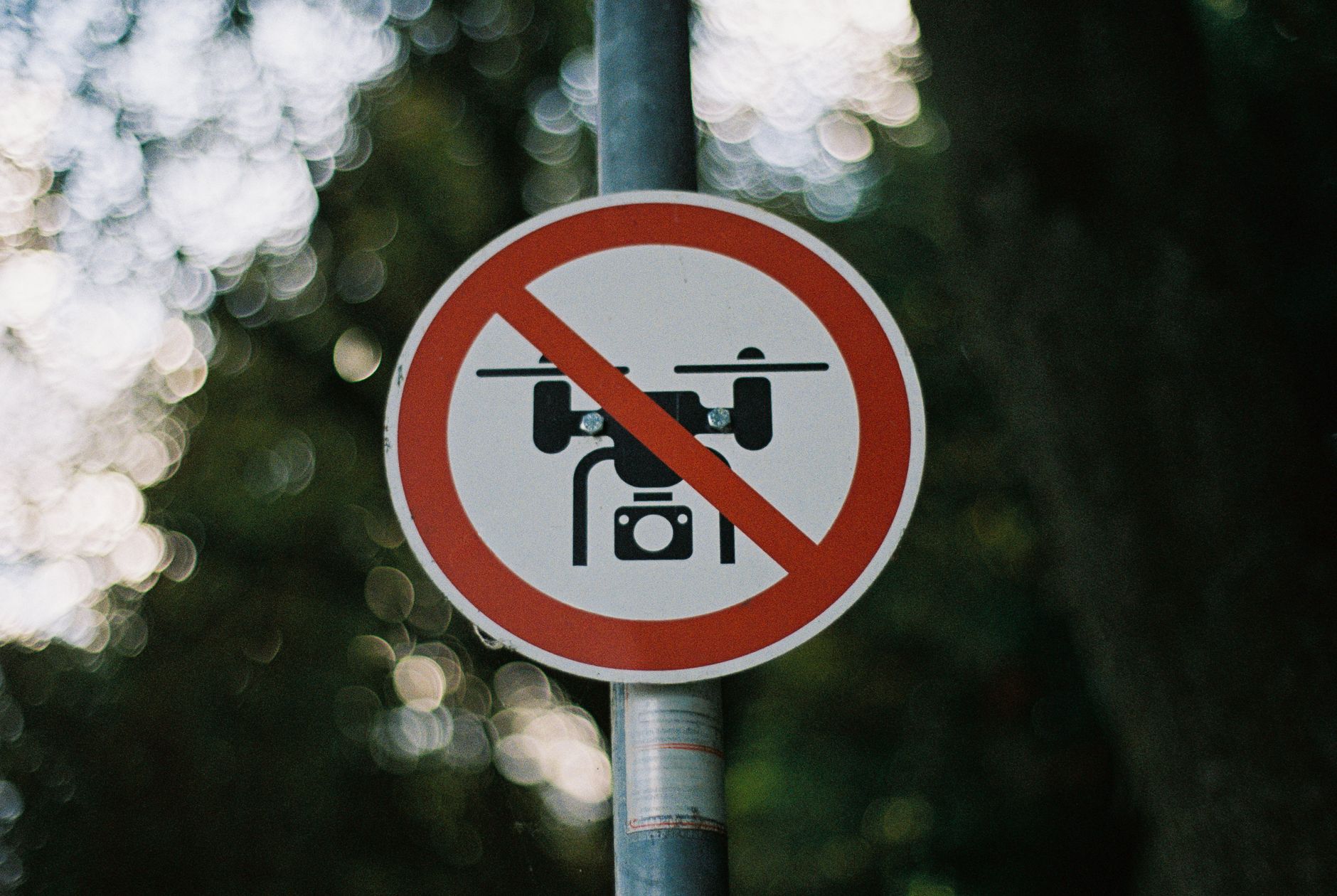
Drones: Strictly Regulated
- Real-name registration — Since January 2024, all drones (including consumer-grade) must be registered with the Civil Aviation Administration of China (CAAC). Flying without registration is illegal
- No-fly zones — City core areas, airport vicinities, military zones, and government building surroundings are basically no-fly zones. Beijing has designated its entire administrative area as a year-round no-fly zone
- Flyable airspace — Non-controlled airspace below 120 meters true altitude is the flyable zone for micro, light, and small drones. Free flight is permitted here without application. Only flights above 120 meters or in controlled airspace require advance application to air traffic control
- Penalties — Unauthorized drone flight in restricted airspace: fine up to ¥500 for minor violations; serious cases: equipment confiscation + fine ¥1,000-10,000
- Foreigners can bring drones into China, but must register and check no-fly zones before flying. Use the "DJI Fly" app to check real-time no-fly zone maps
Portrait Rights: Don't Photograph Strangers Casually
- China's Civil Code stipulates that producing, using, or publishing someone's portrait without their consent is prohibited
- Accidentally including passersby in a landscape shot is generally fine (for non-commercial use)
- But deliberately taking close-up shots of a specific stranger — they have the right to demand you delete it
- Photographing children is especially sensitive — parents may be very upset. Always ask parents for permission first
- Commercial use (advertising, selling photos) requires written consent from the person photographed
- In ethnic minority areas, be extra careful: some Tibetan, Uyghur, or Hui elderly people don't like being photographed, or have religious concerns. Smile and gesture first, gauge their reaction before shooting
Photography Tips
- Forbidden City — Outdoor photos are fine, Treasure Gallery and Clock Gallery are no-photography inside. Too crowded? Go in with the first batch in the morning — best light and fewer people
- Great Wall — Badaling is crowded, Mutianyu has better photo angles. Bring a wide-angle lens — sunrise and sunset are most beautiful
- Tiananmen Square — Flag raising ceremony is packed with people. Selfies are fine, but don't bring a tripod (you may be questioned)
- Temples — Outside halls is fine, inside check for signs. Some temples require buying a "photography ticket" (¥10-20) to take photos
- High-speed rail and train stations — Waiting halls are fine, but don't photograph security checkpoints and ticket gate equipment
Disaster Manual
Disaster Scenario 1: Stopped by Security in a No-Photography Zone
Problem: You raised your phone to take a photo in a museum's no-photography gallery, and a security guard walks over: "please delete."
What to do:
- Cooperate and delete it. Be polite and say "sorry." In most cases, deleting the photo resolves it
- Don't argue "I can do this in my country" — this is China, the rules are different
- If the photo is important to you (like a travel memory), explain to the guard that you're a tourist who didn't know the rules, and ask for leniency. Sometimes they'll let you keep it, but it's not guaranteed
- Lesson: Before entering any gallery, check the entrance for no-photography signs
Disaster Scenario 2: Photographed a Stranger Who Demands Deletion
Problem: You took a photo on the street, and the person in it comes over and says "delete it."
What to do:
- Delete it on the spot and say "sorry." Chinese people are increasingly aware of portrait rights — don't fight it
- If the person is aggressive or persistent, apologize and quickly walk away
- Next time, try to avoid shooting people's faces directly, or use your phone's portrait blur feature
- After taking a photo, if you're unsure whether you caught someone's face, check and decide whether to keep it
Disaster Scenario 3: Drone Stopped in a No-Fly Zone
Problem: You start flying your drone in the city, and within minutes, urban management or police tell you to stop.
What to do:
- Land immediately and cooperate with inspection. Be polite, explain you're a tourist who didn't know about no-fly zones
- You may be asked to show drone registration. Unregistered flight: fine up to ¥200 (serious cases: ¥2,000-20,000). Equipment confiscation only applies to serious unauthorized flight in restricted airspace.
- Unauthorized flight in restricted airspace: fine up to ¥500; serious cases include equipment confiscation and fines of ¥1,000-10,000. First offense with a good attitude may result in just a warning
- Always check the no-fly zone map in your app before flying. In China, city core areas are basically all no-fly
- Want aerial shots of Chinese scenery? Go to suburban or scenic area non-restricted zones — check the map in advance
Information verified: August 2026 · Sources: Civil Code of the PRC portrait rights provisions, CAAC drone registration regulations (uas.caac.gov.cn), various museum visitor guidelines · Policies may change — follow on-site signage.
The following are the author's personal QR codes (not merchant codes), with a fixed amount of ¥10.00 set for testing whether your card binding was successful.
About Personal QR Codes: This website is maintained by an individual. The QR codes are for personal daily use, not merchant codes. Since personal QR codes may not be able to accept international credit card payments, the transaction may fail. However, this does not mean your card binding failed — the fact that you reached the payment page itself confirms that your binding was successful.
About the Amount: Please do not modify the preset amount. This is simply a payment test. If the payment goes through, consider it as buying me a coffee. The fixed amount is set to avoid any inconvenience caused by accidentally entering the wrong amount.
Important: The primary purpose of these codes is to help you verify whether your registration and card binding were successful, not to generate profit. If you're not comfortable, feel free to skip this step.