Quick Answer (30 Seconds)
For getting around China by subway and bus, you need to know about two types of cards: Jiaotong Lianhe cards (nationwide, 300+ cities, includes Hong Kong and Macau) and city cards (like Beijing Yikatong or Shanghai Transport Card, only work in their home city). Jiaotong Lianhe cards are sold at subway station service centers with a ¥20 deposit — top up and use nationwide. For short trips (1-2 weeks), you don't actually need a card — Alipay/WeChat transit codes are more convenient: just scan and walk through the gate, zero deposit. Cards are for long-term stays (deposit is refundable); codes are for short-term visitors (zero cost). Before buying, look for the "Jiaotong Lianhe" (交通联合) logo on the card (a red-and-blue interlocking pattern). Without this logo, the card is basically useless outside the city that issued it.
Bottom line: Under one week, use Alipay. Over a month, consider getting a card.
Full Guide
I've lived in China for five years, and I've got a drawer full of transit cards: two Beijing Yikatong cards, one Shanghai Transport Card, and a Jiaotong Lianhe card. Honestly, I couldn't tell the difference between them at first either — I had to learn the hard way.
Two Systems: Jiaotong Lianhe vs City Cards
China's public transit cards are divided into two systems, and a lot of people (including many Chinese people) can't tell them apart:
- Jiaotong Lianhe card (National Interconnected Transit Card) — A nationwide interoperability standard promoted by China's Ministry of Transport, identifiable by the "Jiaotong Lianhe" (交通联合) logo on the card. As of 2025, it covers 336 prefecture-level cities and over 1,700 counties/districts nationwide, plus Hong Kong (MTR joined in March 2025) and Macau (joined December 2024). Buy one in a Tier-1 city and use it to ride buses and subways in Tier-3/4 cities too.
- City cards — Issued by individual cities, e.g., Beijing Yikatong, Shanghai Transport Card, Guangzhou Yangchengtong, Shenzhen Shenzhentong. Usually only work within the issuing city — useless elsewhere. The upside is local discounts (e.g., Shanghai bus transfer discounts), and many city cards actually double as Jiaotong Lianhe cards too.
How to tell them apart? Look at the card face. If it has the "Jiaotong Lianhe" (交通联合) logo, it works nationwide; if not, it probably only works in the issuing city. When buying, just ask the counter staff: "Is this card usable nationwide?" (quán guó tōng yòng) — they'll generally understand.
Where to Buy a Card
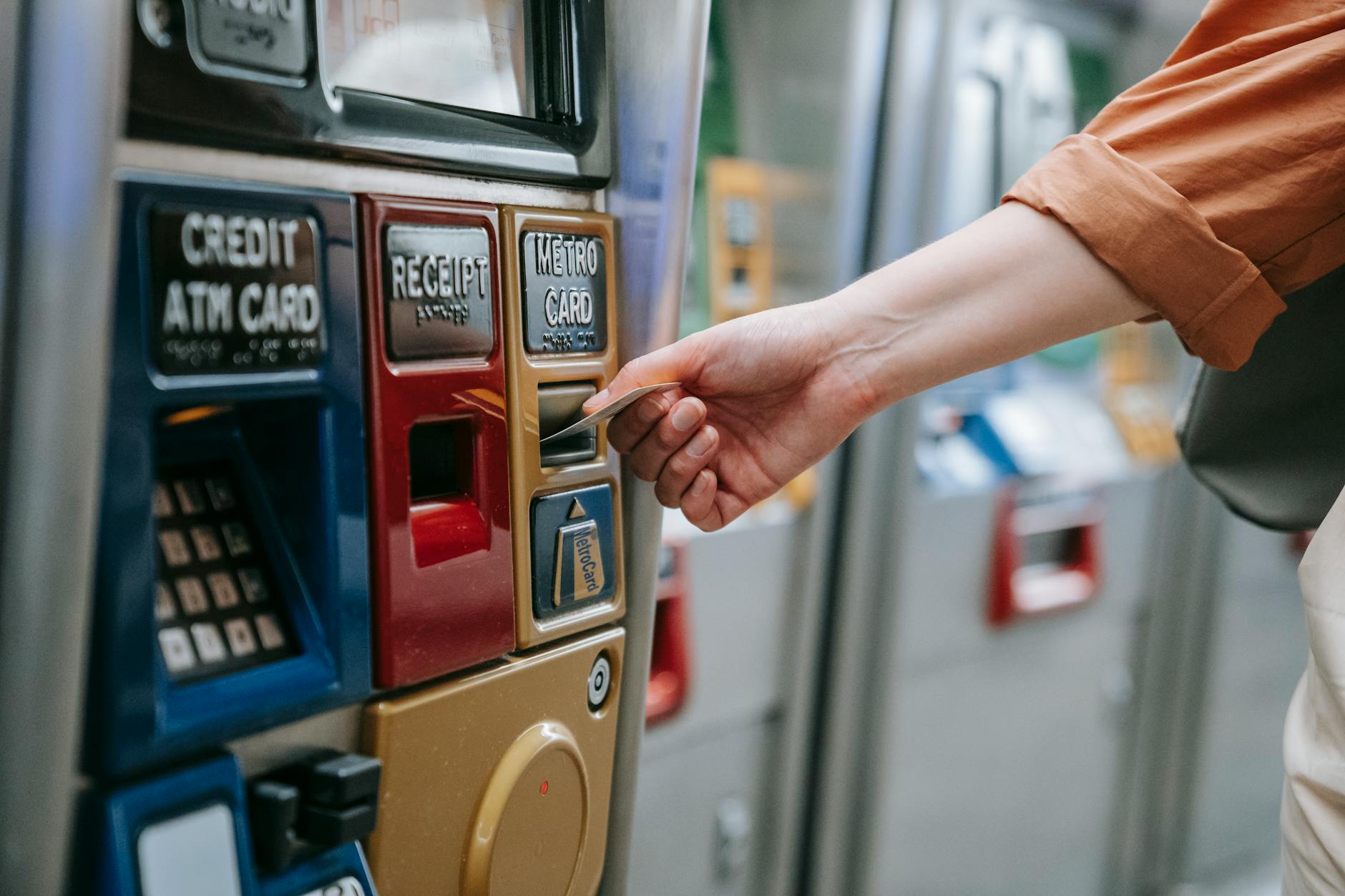
- Subway station service center (recommended) — Every major city's subway stations have a service window selling cards. Just say "bàn kǎ" (办卡, "I want to get a card"), hand over your passport, and you're set. Major cities also have automated card vending machines that accept Alipay/WeChat Pay.
- Convenience stores — Some cities sell transit cards in convenience stores, but the selection is limited and they may not carry Jiaotong Lianhe cards.
- Online purchase — Beijing Yikatong App, Shanghai Transport Card App, and other official channels let you buy cards online (shipped or as an NFC phone card), but you have to wait for delivery — not recommended for short trips.
Deposit and Topping Up
- Deposit — Physical cards usually require a ¥20 deposit (both Beijing Yikatong and Shanghai Transport Card charge this). The deposit is refundable if the card is in good condition.
- Top-up — Subway station service centers, self-service machines, and convenience stores all work. Many cities support Alipay/WeChat QR top-up, and NFC phones can directly add value to the card. Minimum top-up is usually ¥10, maximum around ¥500, depending on the city.
- Phone NFC cards — iPhone and Android phones can open virtual transit cards (Apple Pay Transit Card, Huawei/Xiaomi Wallet), no deposit needed, tap phone on the gate reader, and they support Jiaotong Lianhe too. Your phone and payment method need to support it, though.
Refunding a Card
- Card refunds must be done at designated outlets in the issuing city (subway station service centers or Yikatong branches). Bring your passport and the card.
- Card in good condition, no outstanding balance owed → deposit + remaining balance refunded.
- Card damaged, bent, or water-damaged → deposit not refundable, but the balance can usually still be refunded.
- Jiaotong Lianhe cards generally can only be refunded in the issuing city — cross-city refunds are basically not supported. So for short trips, skip the card and save yourself the hassle of hunting for a refund counter before departure.
Using the Card on Subways and Buses
- Subway — Tap on the sensor at the entry gate, tap again at the exit gate. Fare is automatically deducted by distance, ¥2-10 per ride.
- Bus — Tap when boarding. In some cities, you also need to tap when getting off (distance-based pricing). Don't forget to tap off, or you might be charged the full route fare.
- If the balance is insufficient, the gate will beep and show "insufficient balance" — go to the service center to top up, or switch to QR code scanning.
Transit Card vs Alipay/WeChat Transit Code
- Transit card (physical/NFC) — For long-term stays: refundable deposit, local discounts (e.g., Shanghai metro gives 10% off after ¥70/month in spending), faster than scanning QR codes, and works without internet.
- Alipay/WeChat transit code — For short-term visitors: zero deposit, zero cost, activate anytime in any city, auto-deducts payment with no need to top up. Downsides: needs to be activated separately for each city, sometimes won't open without internet, and QR-code queues at gates get long during rush hour.
- My advice: Staying over a month or taking the subway daily? Get a Jiaotong Lianhe card. Here for a week or two? Just use the Alipay transit code.
Disaster Manual
Disaster Scenario 1: Bought a Card and It Doesn't Work
Problem: You bought a card in a small city or at a tourist site, tried to use it on the subway in a big city, and the gate says "invalid."
What to do:
- Most likely you bought a city card that isn't a Jiaotong Lianhe card. Check the card face for the "Jiaotong Lianhe" (交通联合) logo.
- If it doesn't work, you're out of luck — switch to QR code or buy a paper ticket with cash.
- Next time, specifically ask for a "quánguó tōngyòng de jiāotōng liánhé kǎ" (全国通用的交通联合卡 — a nationwide Jiaotong Lianhe card).
- If you still can't tell the difference, skip the card altogether and use the Alipay transit code.
Disaster Scenario 2: Deposit Not Refunded When Returning the Card
Problem: You go to refund your card before leaving, and the staff says there's an issue with the card — ¥20 deposit not refundable.
What to do:
- Common reasons: card face worn out, bent, or there are unsettled transaction records.
- Ask for the reason ("wèi shénme bù néng tuì" — 为什么不能退). If it's a transaction issue, go to the nearest subway station, swipe the card once to settle, then refund.
- If the card is genuinely damaged, the deposit non-refund policy is the rule. Don't argue — accept it and next time use an NFC phone card or transit code.
Disaster Scenario 3: Topped Up Too Much, Money Left Over
Problem: You topped up ¥100, only used ¥40, and can't take the remaining ¥60 with you.
What to do:
- The balance can be refunded, but you need to go to a refund outlet in the issuing city, and some cities charge a handling fee.
- Small balances (under ¥20) — many outlets won't bother refunding. Just let it go.
- Lesson: Don't top up too much for short trips. ¥50 is enough for two to three days — top up again if needed.
Information verified: August 2026 · Sources: National Public Transport Card Interconnection public data (China Transport Telecommunications & Information Center), Shanghai Municipal People's Government official website (Shanghai-Hong Kong transit card interconnection announcement), Beijing Yikatong / Shanghai Transport Card official documentation · Deposit and top-up rules vary by city — check local announcements.
The following are the author's personal QR codes (not merchant codes), with a fixed amount of ¥10.00 set for testing whether your card binding was successful.

About Personal QR Codes: This website is maintained by an individual. The QR codes are for personal daily use, not merchant codes. Since personal QR codes may not be able to accept international credit card payments, the transaction may fail. However, this does not mean your card binding failed — the fact that you reached the payment page itself confirms that your binding was successful.
About the Amount: Please do not modify the preset amount. This is simply a payment test. If the payment goes through, consider it as buying me a coffee. The fixed amount is set to avoid any inconvenience caused by accidentally entering the wrong amount.
Important: The primary purpose of these codes is to help you verify whether your registration and card binding were successful, not to generate profit. If you're not comfortable, feel free to skip this step.